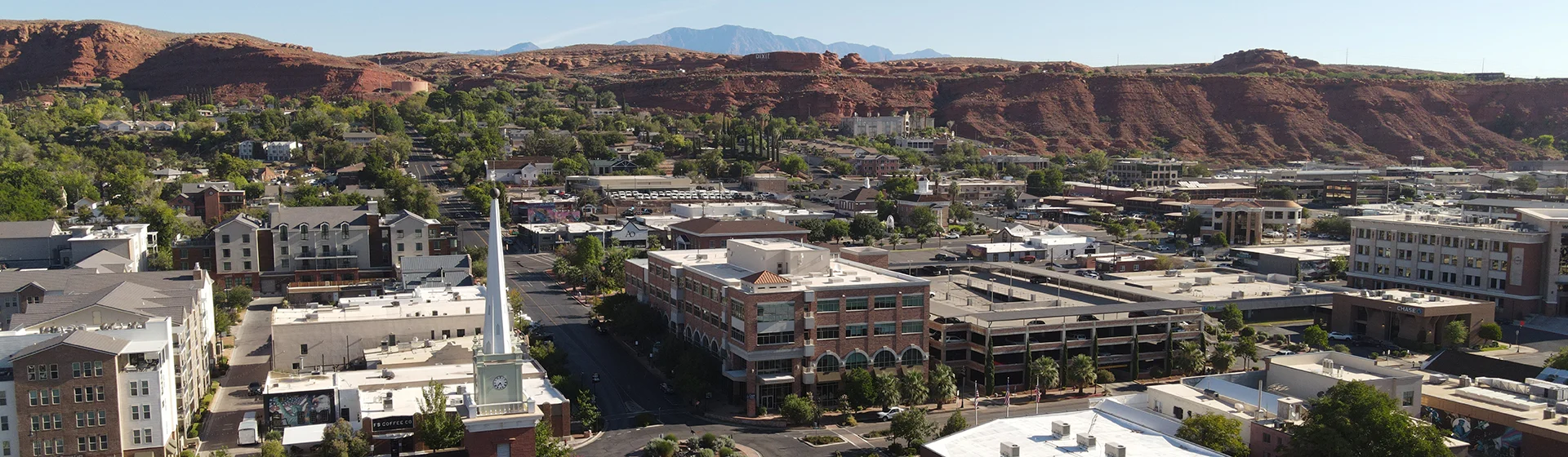
Our story
A family business on five pieces of ground.
The family has been a contractor, a lumber mill, a concrete plant, a gravel operation, and a landlord. Most of it happened on the same handful of sites, used one way and then another.
From the archive
Select a photograph to enlarge
Las Vegas, then St. George
1930sL. Leon Jennings started the business in Las Vegas in the 1930s and brought it north to St. George, where a few thousand people were spread across a valley that had almost nothing commercial in it. A contractor arriving here then did not choose his projects. He built what the county needed next.
What it needed was roads, bridges, and public buildings. That turned out to be a useful education. Pouring a bridge deck teaches you about loads, about how heat shortens the time a mix stays workable, and about what happens years later to work that was rushed.
Some of it is still in service. Drive I-15 through town and you cross overpasses this family poured.
Overpasses and bridge work on the interstate, generations on from the first pour.
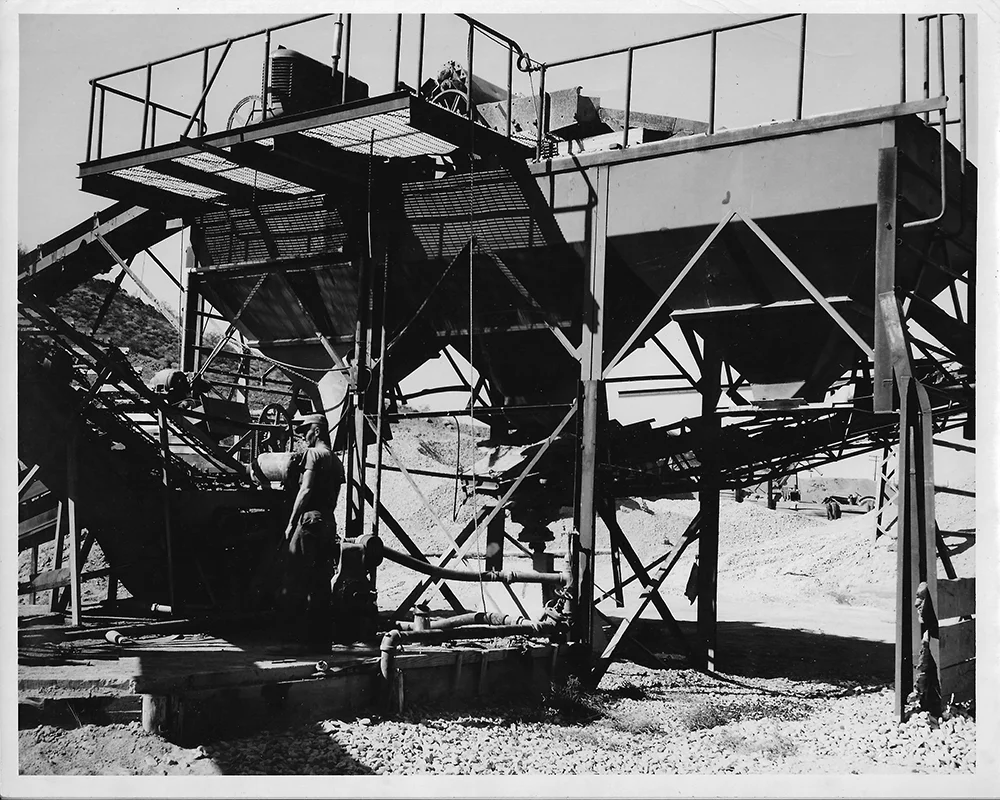
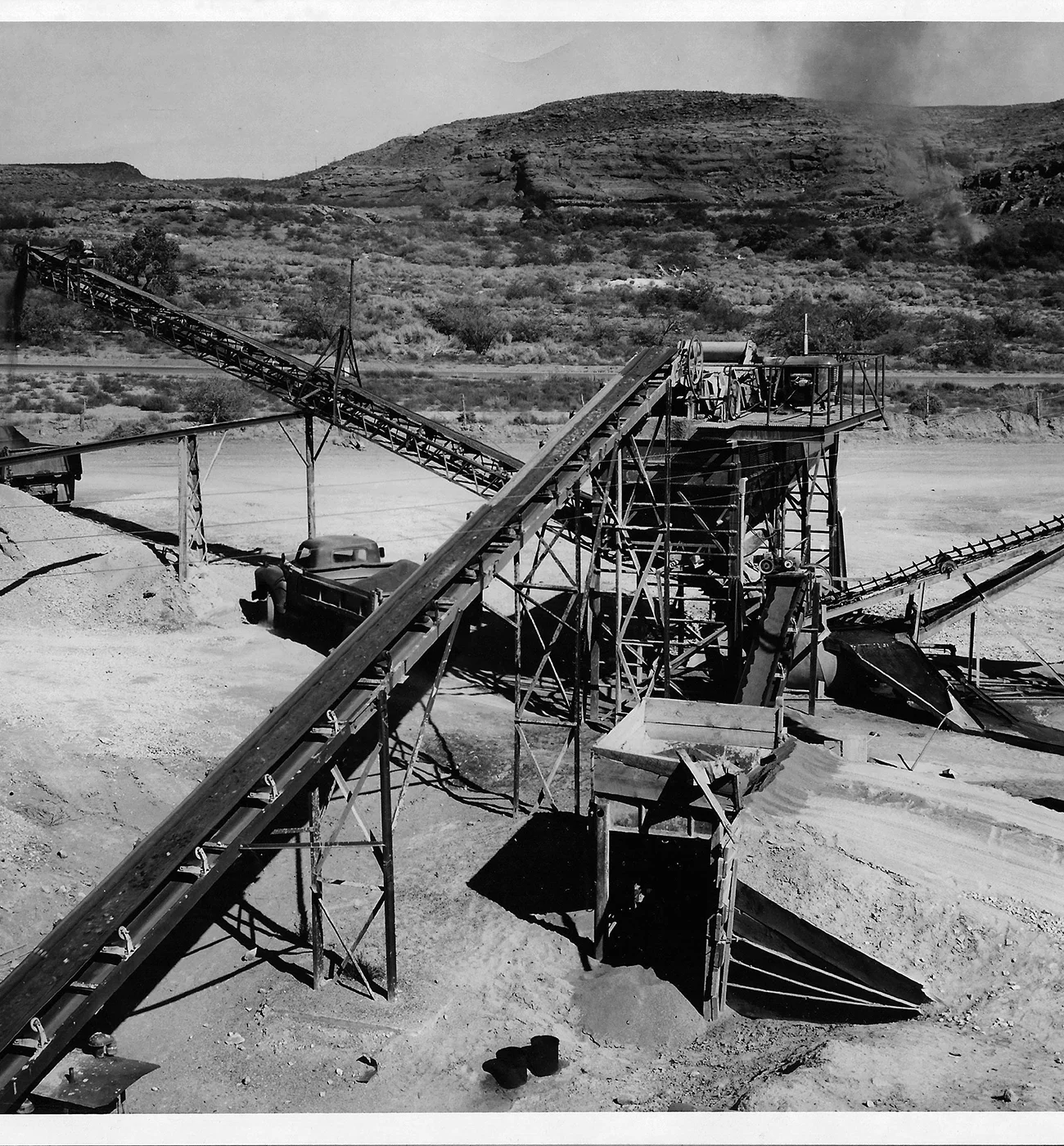
J & J Gravel Plant, 1957
The yard on the Boulevard
1950 to 1996By the 1950s the company had a name that said exactly what it did. J&J Mill and Lumber Co., a working yard in the middle of town with a saw running and trucks moving in and out from early in the morning.
It kept adding. Masonry came first, then precast concrete, then a ready-mix plant, until J&J was selling most of what a builder needed to put up a building in this part of the state. It kept building too, taking on commercial and institutional work across southern Utah and southern Nevada, and a run of specialty jobs installing airport lighting and aviation navigation systems through Nevada and California.
Then somebody did the arithmetic. The contractors buying lumber and concrete from J&J on Monday were losing bids to J&J on Tuesday. A supplier who competes with his own customers eventually stops being either one, so the family picked a side. General contracting went back to the men they sold to, and J&J became a supplier and nothing else.
The bet paid. By 1990 the yards in Cedar City, St. George, and southern Nevada were shipping materials and concrete products across Utah, into northern Arizona, and out to California.
Sunset Corner. The retail center sits on the old supply yard, built by the family that spent forty years running trucks in and out of it.
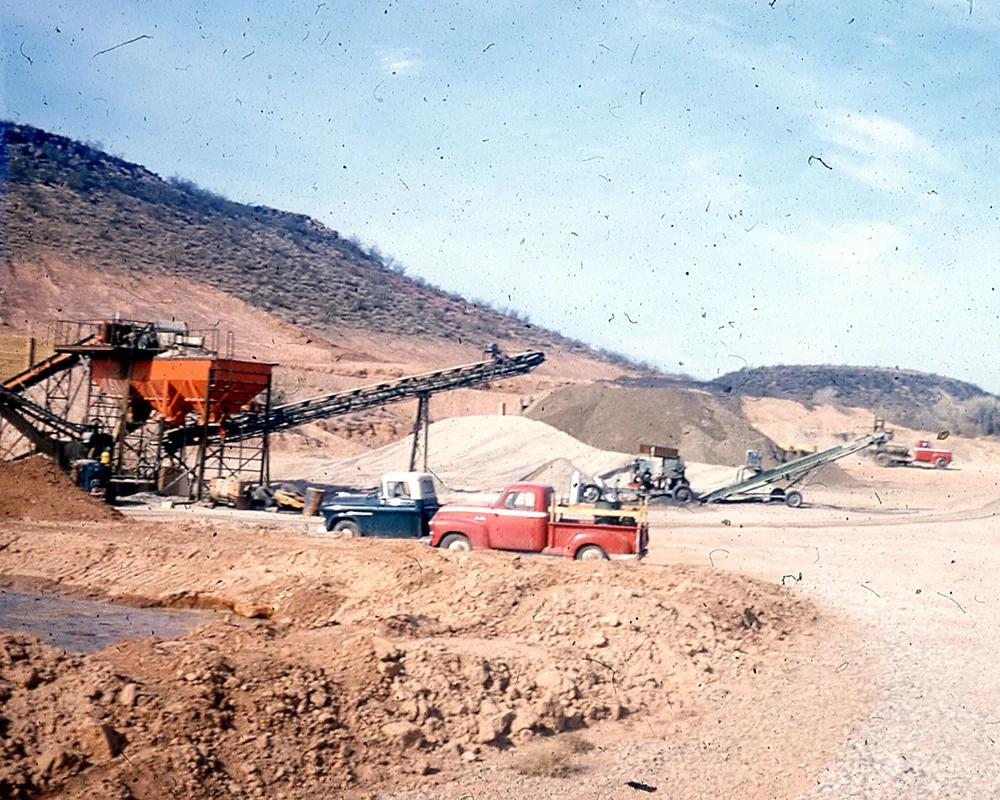
The J & J yard, 1955
They sold the business and kept the dirt.
The business had never been bigger. Four states, three yards, sixty years of customers. That is usually the moment a family digs in.
They sold it. Plants, trucks, inventory, the distribution network, all of it went. The company was renamed Jennings Management Inc.
What they held back was the real estate, which is the slowest and least liquid thing on any balance sheet and the last thing most sellers keep. It looked like the leftovers.
It also left them with sixty years of knowing how a building goes together and nowhere to spend it. Three years later they started putting up buildings of their own, on ground they already owned, and every part of the company that exists today grew out of that.
Fort Pierce
1980s to nowGravel comes from where gravel is, and by this point the town had grown out to meet the pit. The sand and gravel operation moved southeast to Fort Pierce, out where the material was good and the neighbors were far enough away not to mind the noise.
Years later the county had a different problem. Manufacturers were calling, asking for somewhere to land, and there was nowhere zoned to put them. The family was sitting on hundreds of acres of worked ground with highway access and no houses near it.
So the pit became a business park. Getting it there meant rezoning, engineering, and pulling power and water out to a site that had never needed either. Fort Pierce Industrial Park opened ground the county could not have offered otherwise.
An operating industrial park. Gravel pit to industrial ground, which is a use most people never see coming.
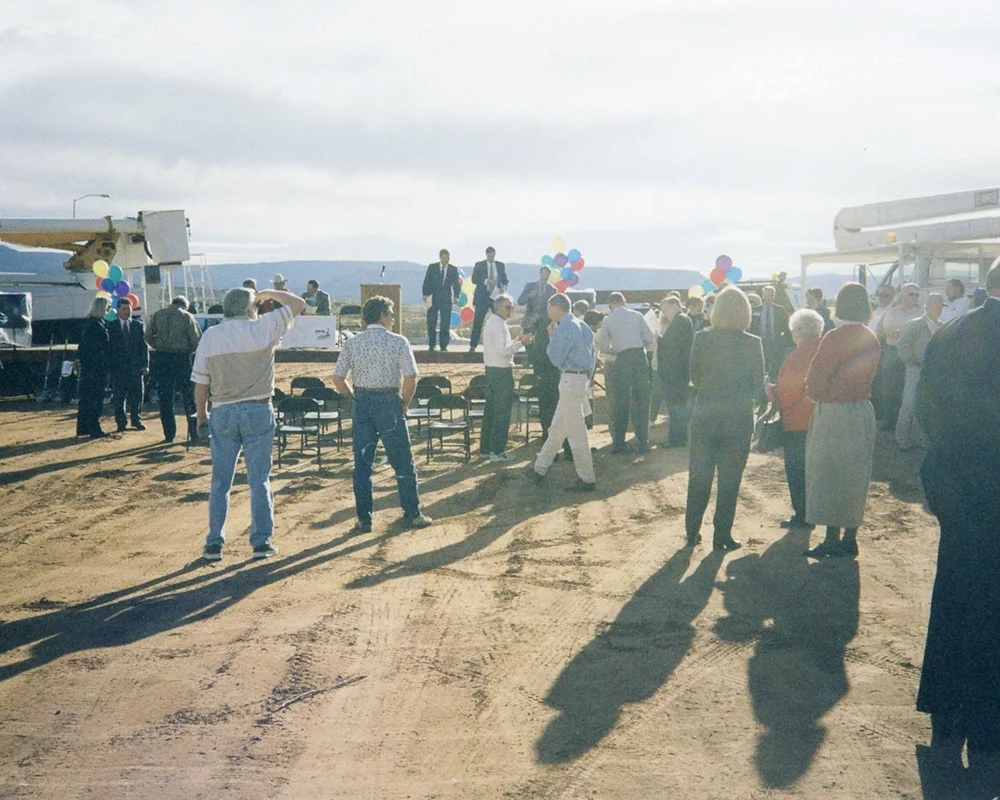
Fort Pierce groundbreaking, 1999
335 East St. George Boulevard
1999 to nowIn 1999 the family put up a building for itself for the first time. Jennings Boulevard Centre, thirty thousand square feet of office and medical space on the Boulevard, built by people who had spent sixty years selling the materials for buildings like it and never owned one.
They kept the top floor and leased the rest, which is how the company learned the other half of this business. Filling a building is a different skill from putting one up, and the fastest way to learn it is to have your own rent riding on it.
Mainstreet Plaza followed downtown, then Pineview Plaza and Commerce Park. The fourth generation came in during 2005. Property management was made its own business the year after, and construction came back in house not long behind it, which put the family back doing the work it had handed away thirty years earlier.
Suite 301. Twenty-seven years later it is still the home office, and the phone number has not changed either.
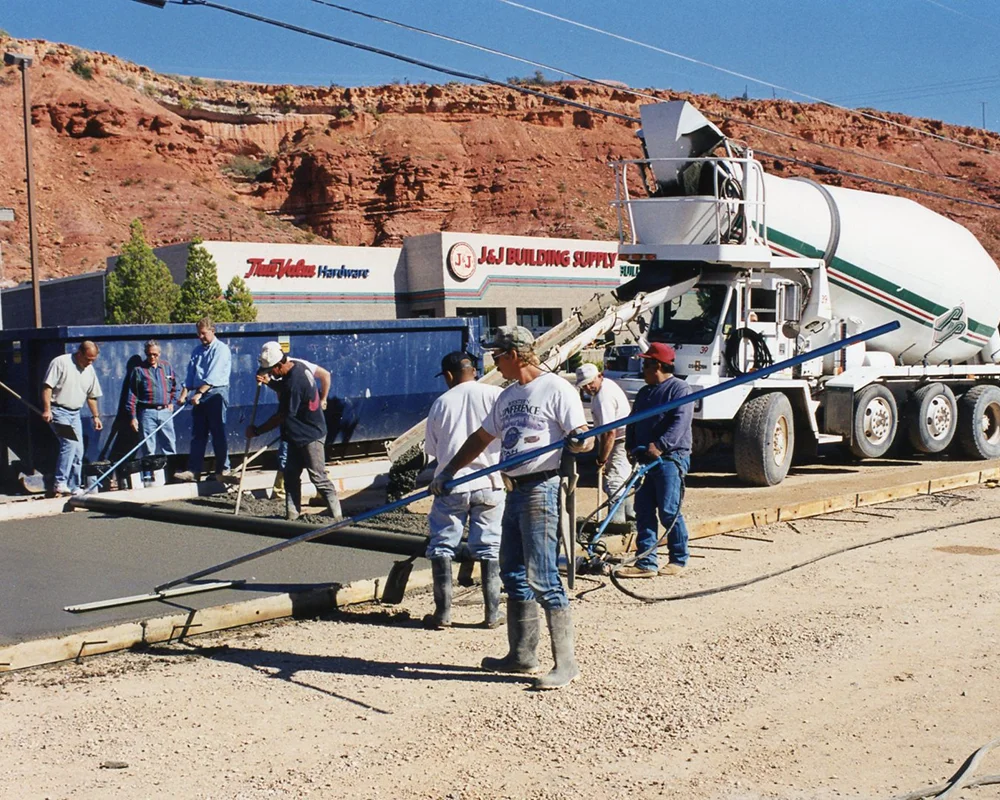
Jennings Boulevard Centre, completed 1999
Exit 6
TodayCommerce Pointe is going up at the interchange now, retail and office and pad sites phased so the first tenants can open their doors while the last buildings are still framed.
Sagestone Homes is starting on the residential side, running the scheduling and structural standards the commercial work already uses. It is the first time in ninety years the family has built houses under its own name.
The office is still three miles up the Boulevard from where the lumber yard used to be.
The same plan the family has always run. Buy in this county, build on it, and keep it.
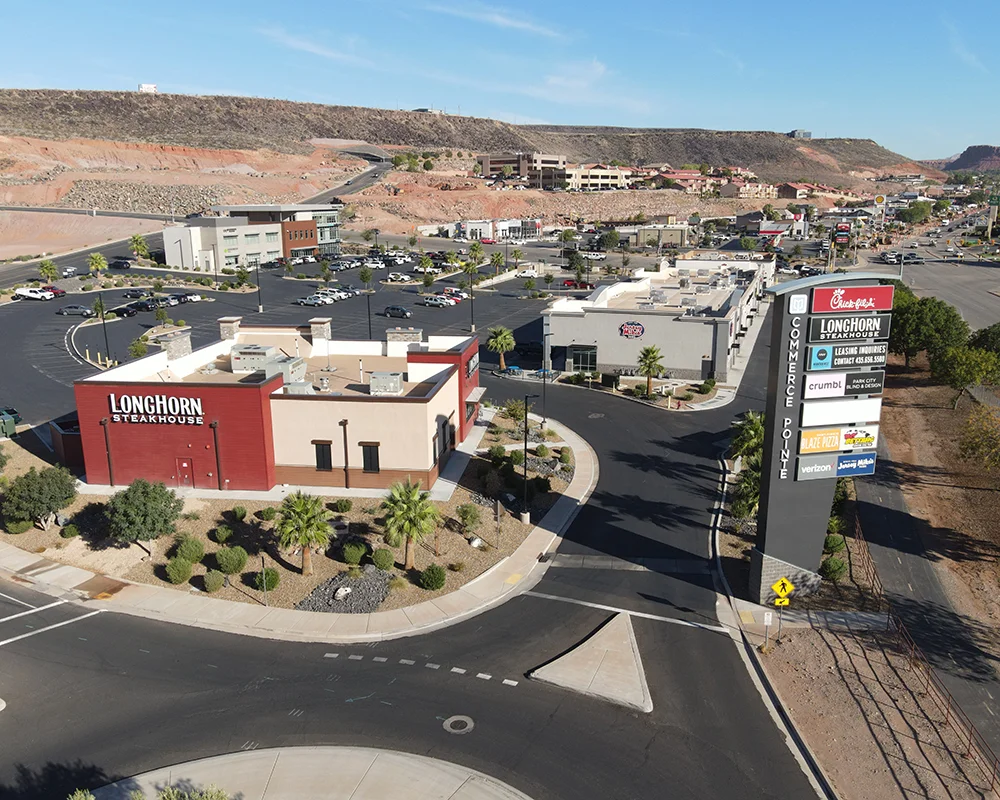
Commerce Pointe, Exit 6, St. George
What carried through
Three things that survived every version of this company.
The business has been a contractor, a manufacturer, a distributor, and an owner. None of these changed with any of it.
One county
Las Vegas at the start, and Washington County ever since. The family never followed the market elsewhere, which is why they know which corner of this one does what.
Knowing how a wall goes together
Sixty years of cutting lumber and pouring concrete leaves you with strong opinions about assemblies. That shows up in the buildings, mostly in the parts nobody photographs.
Taking the slower side
Giving up contracting to keep the customers. Selling the operating business to keep the ground. Both times the family took the more durable side of the trade.
Where that leaves us
Three businesses, one family.
The plan for the next twenty years is the same as it has been for the last ninety. Keep building the portfolio, and keep it here.
JMI Group
Investment, development, property management, and brokerage across Washington County.
JMI Constructors
Commercial construction, for JMI projects and for owners outside the company.
Sagestone Homes
Custom homes, built on the standards the commercial side already runs on.